 Chicago Criminal Lawyer Blog





 In recent years, laws regarding the Possession and Use of Marijuana have been changing throughout the country. This is true in the State of Illinois. In 1931, The Illinois Legislature made the recreational use of marijuana illegal. This legislation was part of a national trend which made the use of marijuana illegal nationally. In recent years, a new national trend has swept throughout the country which is having the opposite effect on the use of Marijuana. This trend clearly appears to be more accepting of the medical and recreational use of Marijuana. This national trend has swept into Illinois as well. In 2016, the Illinois Legislature decriminalized the possession of small amounts of Marijuana in Illinois. If you are caught with 10 grams or less of Marijuana, you will no longer be placed under arrest and subject to criminal prosecution and criminal penalties. In 2016 the State of Illinois made the possession of 10 grams or less of Marijuana a Municipal Ordinance Violation which only carries a civil penalty. The City of Chicago decriminalized the possession of small amounts of Marijuana in 2012.
In 2013, the Illinois Legislature enacted the Compassionate Use of Medical Cannabis Pilot Program Act. This Act legalized the use of Marijuana for medical purposes under certain tight regulations. When the Medical Marijuana Act was enacted in 2013, it was considered one of the most restrictive and prohibitive Medical Marijuana programs in the United States. Recently, Illinois Governor Bruce Rauner signed into law numerous changes to the Medical Marijuana program which have loosened many of the restrictions and made it possible for more people to be able to use Medical Marijuana legally in the State of Illinois.
The recent changes to the Medical Marijuana program in Illinois allows doctors to prescribe Medical Marijuana in place of opioids, for a short period of time, for patients in need of relief from pain. This change to the Medical Marijuana program is an attempt to stop the opioid epidemic from spreading. Another change to the Medical Marijuana program in Illinois removes the requirement that an applicant has to submit to a background search which required that a sample of their fingerprints be submitted with the application. This will have the effect of speeding up the process for being approved to use Medical Marijuana in Illinois. Prior to the recent changes to the Medical Marijuana program, it could take three to four months for an application to be approved. This will also make it possible for patients with a criminal record to be able to legally obtain and use Medical Marijuana. With the recent changes, once your application is accepted and payment is received, you can legally purchase Medical Marijuana at a state approved Medical Marijuana Dispensary by simply showing them your receipt from the Illinois Department of Public Health, the agency that is charged with administering the Medical Marijuana program in Illinois.
 I frequently receive phone calls from clients who have received a speeding ticket for driving at a high rate of speed. While speaking with these clients, it is not uncommon for me to find out that they were driving at such a high rate of speed that I need to explain to them that what they are charged with is not your typical, run-of-the-mill, speeding ticket. I end up having to explain to them that what they are facing is a criminal charge known as Aggravated or Excessive Speeding that carries a possible jail sentence in County Jail. Let me explain how an Aggravated or Excessive Speeding ticket in Illinois can land you in jail and lead to a criminal conviction that will appear on your record in a routine background search.
 On Tuesday, Illinois Governor Bruce Rauner, signed into law a measure that drastically expands the Illinois Medical Marijuana Program. The main focus of the expanded Medical Marijuana legislation is to attack the massive opioid epidemic which led to the loss of almost 2,000 lives in Illinois in 2016, and roughly 72,000 people throughout the country.
 In response to the dramatic rise in the number of mass shootings around the country, earlier this year the Illinois Legislature began working on legislation aimed at trying to stop mass shootings from happening in Illinois. As a result, on July 16h, 2018, Illinois governor Bruce Rauner signed into law the Firearms Restraining Order Act which allows for petitions to be filed in court to have a no contact order issued against someone deemed to be a threat to themselves or to others. The new law is commonly called the “Red Flag” bill. It would allow family members, police and others to seek an Order Protection in Court to take away the guns from someone found to pose “an immediate and present danger” to themselves or to others.
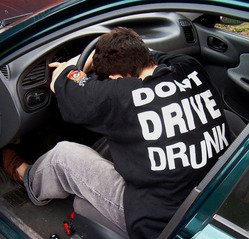 It’s that time of the year again. The Alliance Against Intoxicated Motorists has released its annual study that keeps track of DUI arrests throughout Illinois. Once again, Rockford and Elgin top the list of towns in Illinois reporting the most DUI arrests in 2017. In 2017, Rockford reported 490 DUI arrests compared to 459 in 2016. The 2017 figures represent a 6.8% increase over the 2016 DUI arrest figures. Elgin came in second with a total of 418 DUI arrests in 2017. Elgin had 365 DUI arrest in 2016, a 14.5% increase over 2017.
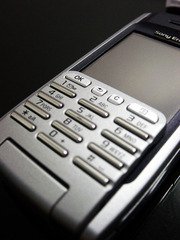 In a closely-watched decision regarding the privacy rights of cell phone users and the power of the police to obtain cell phone tracking information, the United States Supreme Court ruled that the police must obtain a warrant before obtaining the tracking information for the cell phones for most cellphone users.
 I recently met with a client who had a jury trial for a Domestic Battery charge. After several days of a trial and deliberations, the jury could not agree on a verdict and the judge declared a mistrial. Shortly after the mistrial was declared, the prosecution decided that they would retry the client and he came to my office looking to hire me for the second trial. The client had several questions about what happens at a re-trial and whether Double Jeopardy applied to his case. I answered his questions and realized that people misunderstand what Double Jeopardy means.
 I recently met with a client whose son had been questioned by the police at the police station and charged with a Retail Theft. The client was complaining that the police questioned her son at the police station without providing a lawyer for him and without allowing her to be present with her son. She wanted to know whether the police could question her son without her being present. Here’s what I told her:
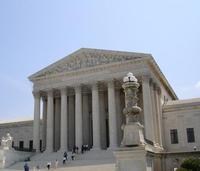 Yesterday, the United States Supreme Court issued several opinions on cases that had been closely watched by observers. The case that has received most of the public attention involves legalized sports betting. But lost in the coverage was the release of two opinions involving the 4th and 5th Amendment rights of criminal defendants. These opinions expand the rights of motorists in their vehicles and the rights of criminal defendants facing prosecution in Criminal Courts. I want to take this opportunity to discuss these two cases and how they will impact the criminal law.
 Everybody knows that if you are arrested and charged with a Retail Theft, or Shoplifting, you will be facing serious criminal penalties that could have serious implications for your future. How many people are surprised to find out that in addition to the criminal implications of a Retail Theft, they will probably soon be facing a potential Civil Penalty. This part of a Retail Theft arrest is not well understood by clients. Many clients mistakenly believe that what happens in one aspect of a Retail Theft case will affect the other aspect of the Retail Theft case. In other words, many people believe that if they just pay the Civil Penalty then the criminal case will be dismissed. This is not how things work and people need to understand what the Civil Penalty is and how it relates to a Retail Theft.