 Chicago Criminal Lawyer Blog


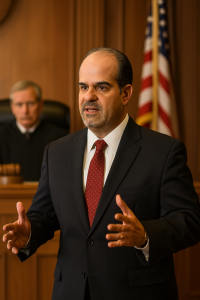
If you were just arrested for DUI in Illinois, there is a good chance you are scared, embarrassed, angry, or all three. I understand. For more than 34 years, I have represented people charged with DUI and other criminal offenses throughout Chicago and the surrounding counties. I have sat across from countless clients who walked into my office convinced that their case was hopeless because the police officer told them they “failed” the field sobriety tests or because a breath test showed they were over the legal limit. One of the first things I tell them is this: Slow down. An arrest is not a conviction. The police do not get the final word. The prosecutor does not get the final word. And a number printed on a breath-testing machine does not automatically mean you are guilty. A DUI case needs to be investigated. It needs to be challenged. And it needs to be handled by somebody who knows what to look for. That is where experience matters.
I Do Not Start a DUI Case by Assuming the Police Are Right
When I receive a DUI case, I do not begin by asking how quickly we can work out a plea. I start by asking questions. Why did the officer stop the car? What exactly did the officer claim to see? Is there squad-car video? Is there body-camera video? Does the video actually match what the officer wrote in the police report? How were the field sobriety tests administered? Was the breath-testing equipment functioning properly? Were the proper procedures followed? Were there constitutional problems with the stop, detention, arrest, search, or testing? Those questions matter. Police officers make mistakes. Machines malfunction. Reports contain exaggerations. People remember things incorrectly. And sometimes the video tells a very different story than the police report.
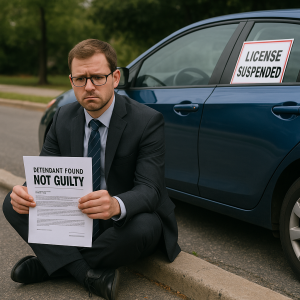
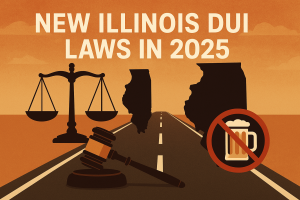 Driving under the influence (DUI) is one of the most serious and aggressively prosecuted offenses in Illinois. If you are facing DUI charges in 2025, you need to understand how Illinois DUI laws work, what penalties you may face, and how an experienced criminal defense attorney like James Dimeas can help protect your rights and your future.
 If you are facing criminal charges for reckless driving or DUI (Driving Under the Influence), you may be wondering about the differences and similarities between these offenses. Both reckless driving and DUI are serious charges that can have significant legal consequences, including fines, license suspension, increased insurance rates, and even jail time. Understanding how these charges relate to one another is crucial when building a strong legal defense.
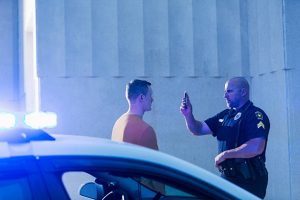 In almost every DUI case that I sign up, the client wants to know whether they were right to take a Breathalyzer Test or whether they made the right decision to refuse to take the Breathalyzer Test. It’s so common that I often answer the question before the client asks the question. Unfortunately, there is no simple answer to that question. That’s because there can be serious consequences when you decide whether to take the test or refuse to take it. In Illinois, the mere refusal to submit to a Breathalyzer Test carries a mandatory 12 month suspension of your Illinois driver’s license. If you take the Breathalyzer Test, and the result shows that the blood alcohol content was over the legal limit of 0.08 or above, your Illinois driver’s license will be suspended for 6 months. This is known as the Statutory Summary Suspension. These suspensions kick in 46 days after the date of your DUI arrest. If you have had a DUI within 5 years of your current DUI, the suspension of your license for taking a Breathalyzer Test can be 12 months, and a refusal would be a 36 month suspension of your license. Even if you don’t have an Illinois driver’s license, your driving privileges in Illinois will be suspended during the suspensions and this could affect your out-of-state driver’s license as well. This could be important for people who live outside of Illinois with an out-of-state license who need to drive in Illinois for work. Since deciding whether or not to submit to a breathalyzer is not a straight-forward decision, let’s talk about the different factors that should come into play when making this decision.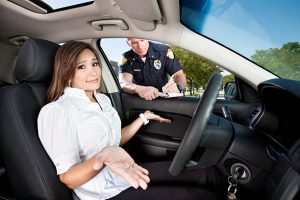
 Last week, the Alliance Against Intoxicated Motorists released their annual survey of DUI arrests in Illinois. The Alliance Against Intoxicated Motorists conducts annual surveys of DUI arrests by the 700 police agencies in Illinois. The survey is funded by the Illinois Department of transportation. The survey gives us an understanding of where most DUI arrests happen and allows us to compare previous years to see any emerging patterns and trends involving DUI cases and DUI arrests.
 It is common for clients to ask me if I can get their case dismissed because the police did not tell them that they have the right to remain silent when they were arrested. The right to remain silent comes from the 5th Amendment to the United States Constitution which protects citizens from incriminating themselves. This means that you cannot be forced to testify against yourself. The 5th Amendment’s right to remain silent is an important right that every citizen has but is not asserted as often as it should be by criminal defendants. In order for a statement made to the police during a custodial interrogation to be used against you in Court, the state has to prove that you made a knowing, intelligent, and voluntary waiver of your 5th Amendment right to remain silent. Let me explain.