 Chicago Criminal Lawyer Blog


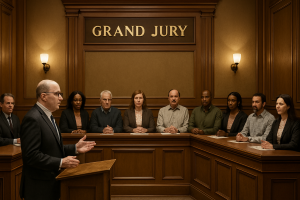 Learning that you have been indicted by a Grand Jury can be frightening, particularly if you have never been involved in the criminal justice system before. People often hear the word “indictment” and assume that it means the government has proven its case or that a conviction is likely. That is not what an indictment means. An indictment is a formal criminal charge. It means that a Grand Jury determined that there was probable cause to charge you with a crime. It does not mean that you have been found guilty, and it does not take away the prosecution’s obligation to prove the charges beyond a reasonable doubt if your case ultimately goes to trial.
As an Illinois criminal defense attorney, I have represented people facing serious felony charges at every stage of a criminal case. One of the first things I explain to a client who has been indicted is that the Grand Jury proceeding and a criminal trial are very different. Understanding that difference can make the process considerably less confusing.
What Is a Grand Jury?
A Grand Jury is a group of citizens who hear evidence presented by a prosecutor and determine whether there is probable cause to believe that a person committed a criminal offense. The Grand Jury does not decide whether someone is guilty or innocent. That decision is reserved for a judge or trial jury later in the case. Instead, the Grand Jury answers a much narrower question: Is there enough evidence to justify formally charging this person and allowing the criminal prosecution to proceed? This distinction is important because probable cause is a much lower standard than proof beyond a reasonable doubt. At a criminal trial, the State must prove every element of the offense beyond a reasonable doubt. During the Grand Jury process, the prosecutor is only attempting to establish probable cause.
How Does a Grand Jury Work in Illinois?
Grand Jury proceedings are very different from what most people picture when they think about a courtroom. The proceedings are generally conducted outside the presence of the public. The prosecutor presents evidence and may call witnesses to testify before the Grand Jury. Those witnesses testify under oath and may be questioned about what they saw, heard, or know about the alleged offense. The prosecutor may present testimony from police officers, investigators, alleged victims, or other witnesses. One of the most significant differences between a Grand Jury proceeding and a criminal trial is that the defense attorney generally is not standing in the Grand Jury room cross-examining the State’s witnesses and presenting the defense case. That means the Grand Jury usually hears the case primarily through the evidence presented by the prosecution. This is one reason an indictment should never be confused with a finding of guilt. The Grand Jury has not necessarily heard the defense explanation. It has not watched a defense attorney cross-examine the State’s witnesses. It has not necessarily heard evidence that contradicts the prosecution’s theory. And it has not determined whether the State can prove the case beyond a reasonable doubt.Those issues are addressed as the criminal case moves forward.
What Does It Mean When a Grand Jury Indicts You?
If the Grand Jury determines that probable cause exists, it can return what is commonly referred to as a “true bill.” An indictment containing the criminal charges can then be filed with the court. From the defendant’s perspective, the most important thing to understand is simple: An indictment is an accusation—not a conviction. The State still has to prove its case. Depending on the circumstances, there may be significant disputes involving the credibility of witnesses, identification of the defendant, physical or forensic evidence, police procedures, searches and seizures, statements allegedly made by the defendant, surveillance video, electronic evidence, or whether the prosecution can establish every element of the charged offense. A criminal defense lawyer’s job is to examine those issues rather than simply accept the allegations contained in the indictment.
Can You Be Indicted Without Knowing About the Grand Jury?
Yes. A person may learn about an indictment only after the Grand Jury has already considered the case. This can be especially unsettling because defendants sometimes believe that they should have been given an opportunity to appear before the Grand Jury and explain their side of the story. The Grand Jury process, however, is not a criminal trial.The fact that your defense was not presented to the Grand Jury does not prevent your attorney from challenging the State’s evidence once the case is pending in court. In fact, that is when a detailed defense investigation often begins.
What Happens After You Are Indicted?
What happens next depends on the circumstances of the case, including whether you are already in custody and how the case reached the Grand Jury.The case will proceed before a judge, and the defendant will be formally advised of the charges. Defense counsel can obtain and review discovery, investigate the allegations, interview witnesses when appropriate, examine physical and electronic evidence, and determine whether motions should be filed. For many clients, this is the point where the case begins to look very different from the allegations initially presented by the prosecution. Police reports tell the story from the government’s perspective. They do not necessarily tell the entire story. An experienced criminal defense attorney should independently analyze the evidence.
Reviewing the Evidence After an Indictment
One of the most important parts of defending an indicted felony case is obtaining and carefully reviewing the prosecution’s evidence. Depending on the type of case, discovery may include police reports, photographs, body-camera footage, surveillance recordings, recorded interviews, witness statements, forensic testing, laboratory reports, medical records, cellphone evidence, social-media evidence, search warrants, photographs, and other materials. The defense should examine not only what is contained in those materials but also what may be missing. For example:
-Did witnesses give inconsistent accounts?
-Was important evidence preserved?
-Does surveillance footage actually support the allegations?
-Were identification procedures reliable?
-Did the police obtain evidence through a lawful search?
-Were statements obtained in violation of the defendant’s constitutional rights?
-Does forensic evidence actually connect the defendant to the alleged crime?
-Are there witnesses or records that law enforcement failed to investigate?
Those questions can become extremely important as the defense develops.
Can Criminal Charges Be Dismissed After a Grand Jury Indictment?
An indictment does not guarantee that a case will result in a conviction. Depending on the facts and the law, a defense attorney may challenge evidence, file appropriate pretrial motions, negotiate with prosecutors, prepare the case for trial, or pursue other legal remedies. Every case is different. Sometimes evidence may be suppressed because it was obtained unlawfully. Sometimes additional investigation reveals weaknesses in a witness’s account. In other cases, forensic, video, electronic, or documentary evidence may contradict an important part of the prosecution’s theory. The appropriate defense strategy can only be determined after carefully reviewing the circumstances surrounding the charges.
What Is the Difference Between an Indictment and a Conviction?
This is one of the most important distinctions for anyone facing felony charges. An indictment means that probable cause was found to formally charge someone with an offense. A conviction means that a defendant was found guilty or entered a guilty plea. Those are very different stages of a criminal case. When someone has just been indicted, the criminal case may only be beginning. There may still be extensive discovery, investigation, motion practice, negotiations, hearings, and potentially a trial ahead. Most importantly, a defendant continues to have the presumption of innocence.
Should You Talk to the Police After Being Indicted?
If you learn that you have been indicted—or believe you are the target of a serious criminal investigation—you should be extremely cautious about speaking with law enforcement without first consulting a criminal defense attorney. People sometimes believe they can make a criminal investigation disappear simply by explaining what happened. Unfortunately, statements can be misunderstood, taken out of context, contradicted by other evidence, or later used by the prosecution. Even a person who believes that they have done nothing wrong should understand their constitutional rights before deciding whether to speak with investigators. Contacting a criminal defense lawyer does not make you look guilty. It means you are taking the allegations seriously and protecting your legal rights.
Why Hiring a Criminal Defense Attorney Early Matters
Serious felony cases can involve thousands of pages of reports, hours of recordings, numerous witnesses, forensic evidence, cellphone records, surveillance footage, and complicated legal issues. Waiting until shortly before trial to begin investigating those issues can put a defendant at a significant disadvantage. When I represent someone who has been indicted, my goal is to understand exactly how the investigation was conducted and how the prosecution intends to prove its case. That means looking beyond the indictment itself. What evidence caused investigators to focus on my client? What witnesses did the police interview? Were other potential witnesses overlooked? Are statements consistent with the physical evidence? Were constitutional rights violated? Does the evidence actually prove what the prosecution claims it proves? Those questions can be critical to the defense.
Contact Illinois Criminal Defense Attorney James Dimeas
If you have been indicted by a Grand Jury in Illinois, you are facing a serious legal situation, but an indictment is only the beginning of the criminal court process. You still have constitutional rights. You still have the presumption of innocence. And the prosecution still has the burden of proving the charges against you. The decisions made early in a felony case can have consequences throughout the remainder of the prosecution.
Illinois criminal defense attorney James Dimeas represents individuals charged with serious criminal offenses and understands how to investigate felony cases, challenge prosecution evidence, file appropriate pretrial motions, negotiate with prosecutors when doing so is in the client’s interest, and take cases to trial when necessary. If you or a family member has been indicted by a Grand Jury or is under investigation for a serious criminal offense in Illinois, contact James Dimeas to discuss the charges, your rights, and the options available for defending the case.
Being indicted does not mean you are guilty. It means it is time to start building your defense.
James Dimeas, is a nationally-recognized, award-winning, criminal defense lawyer, with over-34 years of experience handling criminal cases in Chicago, Cook County, DuPage County, Kane County, and Lake County. Recently, James Dimeas was named a “Top 100 Criminal Defense Lawyer in the State of Illinois for the Year” by the American Society of Legal Advocates. James Dimeas was named a “Best DUI Attorney” and a “Best Criminal Defense Lawyer in Chicago” by Expertise. James Dimeas was named a “Top 100 Criminal Defense Trial Lawyer” by the National Trial Lawyers. The National Academy of Criminal Defense Attorneys awarded James Dimeas the “Top 10 Attorney Award for the State of Illinois.” James Dimeas is rated “Superb” by AVVO, the highest classification possible for any criminal defense lawyer in the United States. The American Institute of Criminal Law Attorneys recognized James Dimeas as a “10 Best Attorney for Client Satisfaction.” Attorney and Practice Magazine gave James Dimeas the “Top 10 Criminal Defense Attorney Award for Illinois.
Contact James Dimeas at 847-807-7405, or fill out our online contact form and I will contact you to discuss your case to protect your rights and secure your future.
Additional Blogs:
Can The Police Arrest Me Without Any Evidence in Illinois, by James G. Dimeas, July 3, 2017.