 Chicago Criminal Lawyer Blog





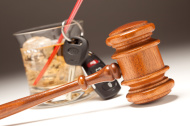 Most drivers will never have to decide whether to take a breathalyzer test or not. But if you are driving a vehicle in Illinois, you should be aware of what could happen to you and to your license if you are ever pulled over by a police officer and asked to take a breathalyzer test.
If a police officer pulls you over and suspects that you may be under the influence of alcohol, that police officer has a right to take you down to the police station and ask that you take a breathalyzer test. If you are ever faced with a situation like this, you have to make a quick decision between two choices. Should you take a breathalyzer test or should you refuse to take a breathalyzer test? If you have not had any alcohol to drink, then the choice seems pretty clear. Taking a breathalyzer test would prove that you have no alcohol in your system. But if you have been drinking and are unsure about whether you should take a breathalyzer test, you need to be aware of what the consequences could be of refusing to take a breathalyzer test.
When a police officer asks you to take a breathalyzer test, the officer will hand you a document entitled, “Warning to Motorist” which will inform you that if you submit to a breathalyzer test and the test indicates that your blood alcohol level was .08 or above, your driver’s license will be suspended by the Illinois Secretary of State for 6 months. If you refuse to take a breathalyzer test, your driver’s license will be suspended for 12 months by the Illinois Secretary of State. These driver’s license suspensions will take effect on the 46th day after your arrest.
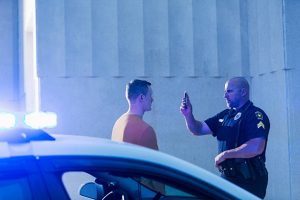 I recently met with a client who was arrested and charged with a DUI after he had pulled over his car to take a nap because he was afraid that he had too much to drink. You do not have to actually be driving your car to be charged with a DUI. You could be charged with a DUI as long as you had actual physical control of a vehicle on the public roadway. So as long as you were in a vehicle and you had the keys near you, the law will consider you to have been in actual physical control of the vehicle.
 Police get frustrated when they pull over a motorist for suspicion of Driving Under the Influence of Alcohol and the driver refuses to submit to a breathalyzer test when the officer requests that they take such a test. The reason behind their frustration is because, in many cases, if they do not have a breathalyzer test result, it becomes harder for the state to prove in Court that the driver was operating a motor vehicle under the influence of alcohol.
 Being arrested by a police officer is something that nobody would ever want to experience. While being arrested by a police officer does not automatically mean that you will be charged with a crime, it usually means that you are suspected of committing a crime and you should be aware of what may happen and what you should do to protect yourself from what the future may hold.
 In the past few years, the Illinois Legislature has enacted laws which make Excessive Speeding a much more serious matter than most people think. Most people are conditioned to believe that if they are pulled over for speeding they will receive a simple speeding ticket and the most that could happen to them is that they have to pay a steep fine and take a Traffic School class. The recent changes to the speeding laws have made certain Excessive Speeding tickets an actual crime. From all of the calls that I get from prospective clients, this area of the criminal law may be one of the most misunderstood subjects.
 Last week I had a meeting with a client in my office in Schaumburg who was being charged with a felony in Rolling Meadows. The client has a lawyer who was representing him for the case. The client came in for a consultation because he was not happy with the services that his current lawyer was providing and was considering hiring me to represent him in the case. The client told me that he had spoken to his lawyer and requested copies of the police reports. His lawyer refused to provide copies of the police report and the client was very upset with that decision.
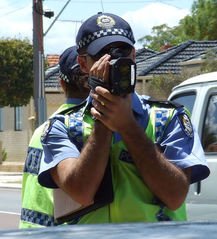 In the past several weeks, I have spoken to several clients who were arrested for Aggravated or Excessive Speeding and were charged with a crime. Most of the people I spoke to did not realize that they could be arrested for speeding. Many people do not understand the Illinois speeding laws and how a simple speeding ticket can lead to you being arrested and facing the real possibility of having a criminal conviction appear on your record and a possible jail sentence in your future. I want to take this opportunity to try to help people understand just how drastic the consequences of a speeding ticket in Illinois can be.
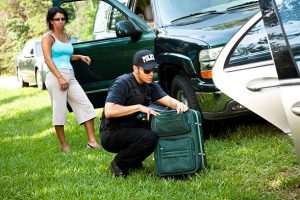 It is common to have a client come into my office who is facing criminal charges resulting from a search of their vehicle by a police officer. Many of those clients want to know whether the police had the right to search their vehicle and whether I can have the evidence that was recovered thrown out of Court. There’s no simple answer to this question. Whether the police had the right to search the vehicle and whether I can convince the Court to throw out the evidence depends on the facts of each individual case. I want to talk a little bit about the general rules and what the constitutional limits are when it comes to the police searching a motor vehicle.
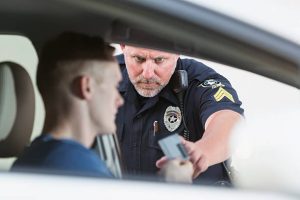 Being pulled over by a police officer is a stressful experience. This is especially true if you know that you have been drinking alcohol. Your mind starts racing and you want to make sure that you don’t give the police officer any reason to suspect that you are under the influence of alcohol. Unfortunately, many motorists don’t really think before they open their mouth. They don’t realize that the police are not there to help them. The police have a job to do and their job begins the moment they notice your vehicle. You need to understand what the police officer is doing and how your conduct and your statements can be used against you in court.
 Yesterday, Kane County State’s Attorney, Joe McMahon, announced that Kane County saw a 7% increase in the number of felony cases filed by the Kane County State’s Attorney’s Office in 2017. The increase in the filing of felonies in Kane County continues a rise in the number of felony cases filed that began in 2015. In 2007, Kane County saw 3,349 felony cases filed. That number declined from that year until 2015, when 2,011 felony cases were filed in Kane County. In 2016, 2,255 felony cases were filed. In 2017, 2,413 felony cases were filed. That represents a 7% increase over 2016.