 Everybody knows that if you are arrested and charged with a Retail Theft, or Shoplifting, you will be facing serious criminal penalties that could have serious implications for your future. How many people are surprised to find out that in addition to the criminal implications of a Retail Theft, they will probably soon be facing a potential Civil Penalty. This part of a Retail Theft arrest is not well understood by clients. Many clients mistakenly believe that what happens in one aspect of a Retail Theft case will affect the other aspect of the Retail Theft case. In other words, many people believe that if they just pay the Civil Penalty then the criminal case will be dismissed. This is not how things work and people need to understand what the Civil Penalty is and how it relates to a Retail Theft.
Most people charged with a Retail Theft will be facing a Class A Misdemeanor. The potential penalty for a Retail Theft depends on the value of the item(s) that you stole, or attempted to steal. The cut-off between a Misdemeanor and a Felony officially is $300. If the aggregate value of the items is $300 or less, you will be charged with a Misdemeanor. If the aggregate value of the item(s) is $300 or more, you may be charged with a Felony. A Class A Misdemeanor conviction for a Retail Theft carries a maximum punishment of up to one year in county jail and a maximum fine of $2,500. Most Felony Retail Theft charges are Class 4 Felonies in Illinois. A Class 4 Felony charge for Retail Theft in Illinois carries a maximum punishment of one to three years in prison and a maximum fine of $25,000.
In the past few years I have seen a drastic increase in the number of Retail Theft cases charged as a Municipal Ordinance Violations. Almost every City, Town, and Village has set up a Municipal Violation court system that moves cases from the County Criminal Court to an Administrative Municipal Ordinance Violation Court that is controlled by the Town or the Village in which the offense occurred. The Judge who presides over the case is an Administrative Law Judge who is employed by the municipality. Many times the Administrative Law is a full-time employee of the town. The standard of proof in a Municipal Court is much lower than in a Criminal Court. A Municipal Ordinance Violation is a civil matter between you and the municipality. The Rules of Evidence are relaxed and the penalties that can be imposed by an Administrative Law Judge in a Municipal Court are civil in nature. In other words, the penalties are monetary as opposed to Criminal. However, depending on the County, the Town, and the facts and circumstances of your arrest, the Municipal Ordinance Violation may appear in a background search. If you were fingerprinted, your Retail Theft may appear in a background search. Some Counties will put your case in the Court computer system which could be found in a background search. Many employers will not hire someone if they suspect that the prospective employee may steal from them. Therefore, it is imperative that you consult with an experienced Retail Theft lawyer if you receive a Municipal Ordinance Violation. An experienced Retail Theft attorney will know whether there’s a possibility that a Retail Theft Municipal Ordinance Violation may appear in a background search. You cannot simply assume that a Municipal Ordinance Violation for Shoplifting will not appear on a background search.
 Chicago Criminal Lawyer Blog





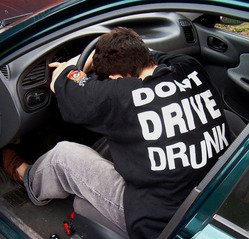 It’s that time of the year again. The Alliance Against Intoxicated Motorists has released its annual study that keeps track of DUI arrests throughout Illinois. Once again, Rockford and Elgin top the list of towns in Illinois reporting the most DUI arrests in 2017. In 2017, Rockford reported 490 DUI arrests compared to 459 in 2016. The 2017 figures represent a 6.8% increase over the 2016 DUI arrest figures. Elgin came in second with a total of 418 DUI arrests in 2017. Elgin had 365 DUI arrest in 2016, a 14.5% increase over 2017.
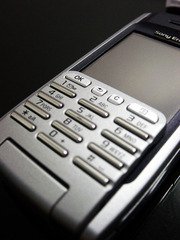 In a closely-watched decision regarding the privacy rights of cell phone users and the power of the police to obtain cell phone tracking information, the United States Supreme Court ruled that the police must obtain a warrant before obtaining the tracking information for the cell phones for most cellphone users.
 I recently met with a client who had a jury trial for a Domestic Battery charge. After several days of a trial and deliberations, the jury could not agree on a verdict and the judge declared a mistrial. Shortly after the mistrial was declared, the prosecution decided that they would retry the client and he came to my office looking to hire me for the second trial. The client had several questions about what happens at a re-trial and whether Double Jeopardy applied to his case. I answered his questions and realized that people misunderstand what Double Jeopardy means.
 I recently met with a client whose son had been questioned by the police at the police station and charged with a Retail Theft. The client was complaining that the police questioned her son at the police station without providing a lawyer for him and without allowing her to be present with her son. She wanted to know whether the police could question her son without her being present. Here’s what I told her:
 Yesterday, the United States Supreme Court issued several opinions on cases that had been closely watched by observers. The case that has received most of the public attention involves legalized sports betting. But lost in the coverage was the release of two opinions involving the 4th and 5th Amendment rights of criminal defendants. These opinions expand the rights of motorists in their vehicles and the rights of criminal defendants facing prosecution in Criminal Courts. I want to take this opportunity to discuss these two cases and how they will impact the criminal law.
 Most drivers will never have to decide whether to take a breathalyzer test or not. But if you are driving a vehicle in Illinois, you should be aware of what could happen to you and to your license if you are ever pulled over by a police officer and asked to take a breathalyzer test.
 I recently met with a client who was arrested and charged with a DUI after he had pulled over his car to take a nap because he was afraid that he had too much to drink. You do not have to actually be driving your car to be charged with a DUI. You could be charged with a DUI as long as you had actual physical control of a vehicle on the public roadway. So as long as you were in a vehicle and you had the keys near you, the law will consider you to have been in actual physical control of the vehicle.
 Police get frustrated when they pull over a motorist for suspicion of Driving Under the Influence of Alcohol and the driver refuses to submit to a breathalyzer test when the officer requests that they take such a test. The reason behind their frustration is because, in many cases, if they do not have a breathalyzer test result, it becomes harder for the state to prove in Court that the driver was operating a motor vehicle under the influence of alcohol.
 Being arrested by a police officer is something that nobody would ever want to experience. While being arrested by a police officer does not automatically mean that you will be charged with a crime, it usually means that you are suspected of committing a crime and you should be aware of what may happen and what you should do to protect yourself from what the future may hold.