
Over the holiday weekend, the Schaumburg police conducted their annual “Drive Sober or Get Pulled Over” enforcement campaign. The enforcement campaign ran from December 16 to January 2. The annual campaign is run by the Illinois Department of Transportation and is managed funded by the National Highway Traffic Safety Association, which provides the funding for the campaign. Most of the local police departments in the area participated in the campaign. The funds allowed the Schaumburg Police to add four additional units to be dedicated to enforcing the traffic laws during the campaign.
The Schaumburg Police released their numbers last week. The vast majority of citations issued were for Distracted Driving. That is not surprising. I have seen a drastic increase in the number of tickets issued for Distracted Driving in recent years.. Distracted Driving is what is commonly known as “texting and driving”. However, there’s much more to distracted driving than just texting. Authorities have been struggling with trying to curb the use of cell phones while driving. Numerous studies throughout the years have shown that using a cell phone while driving is more dangerous than drinking and driving. When cell phones started becoming popular, the state legislature made it illegal to text while driving. That’s why any new laws or rules having to do with the use of cell phones by drivers are commonly associated with texting. After the initial texting and driving laws were passed, authorities realized that much more needed to be done. The cell phone rules were tightened, and today, the rules against using a cell phone while driving are much more strict than ever. It is against the law to use a cell phone when driving as long as the phone is completely hands free. As a general rule, touching your cell phone while you are driving can land you a date in Traffic Court. There are some very limited exceptions to the general rule, but officers have become increasingly diligent and aggressive when it comes to enforcing the cell phone laws. On any given day in Traffic Court, it is not uncommon to see that a large percentage of citations issued are for Distracted Driving. When the first cell phone laws were passed, the punishment for getting caught was a fine that was not reported to the Secretary of State so it did not affect your license. The current laws have made a ticket for Distracted Driving to have the same effect on your license as any other traffic tickets. Distracted Driving tickets are reported to the Secretary of State and these tickets can count points against your license, just like any other ticket.
Only one speeding ticket was issued by the Schaumburg Police during the campaign and 1 DUI occurred during the campaign over the holiday. The only DUI arrest was For Driving Under the Influence of Drugs. When Illinois legalized the recreational use of Marijuana, authorities were concerned that it would cause a big jump in the number of people charged with a DUI for Driving Under the Influence of Cannabis. That did not materialize. While it became much more common to see DUI cases involving the use of Marijuana, I have not noticed a big increase in such cases. It is not very common to see DUI cases involving marijuana.
 Chicago Criminal Lawyer Blog





 I frequently get calls from clients asking me what they should do because the police called asking them to come to the police station to answer some questions. Being asked by the police to come to the station for questioning can be intimidating and confusing. Whether you’re a witness, a person of interest, or potentially a suspect, it’s crucial to handle this situation carefully to protect your rights and avoid unintentionally complicating matters. Here, I will guide you through the essential steps to take if the police request your presence for questioning, so that you are informed and prepared.
 In almost every DUI case that I sign up, the client wants to know whether they were right to take a Breathalyzer Test or whether they made the right decision to refuse to take the Breathalyzer Test. It’s so common that I often answer the question before the client asks the question. Unfortunately, there is no simple answer to that question. That’s because there can be serious consequences when you decide whether to take the test or refuse to take it. In Illinois, the mere refusal to submit to a Breathalyzer Test carries a mandatory 12 month suspension of your Illinois driver’s license. If you take the Breathalyzer Test, and the result shows that the blood alcohol content was over the legal limit of 0.08 or above, your Illinois driver’s license will be suspended for 6 months. This is known as the Statutory Summary Suspension. These suspensions kick in 46 days after the date of your DUI arrest. If you have had a DUI within 5 years of your current DUI, the suspension of your license for taking a Breathalyzer Test can be 12 months, and a refusal would be a 36 month suspension of your license. Even if you don’t have an Illinois driver’s license, your driving privileges in Illinois will be suspended during the suspensions and this could affect your out-of-state driver’s license as well. This could be important for people who live outside of Illinois with an out-of-state license who need to drive in Illinois for work. Since deciding whether or not to submit to a breathalyzer is not a straight-forward decision, let’s talk about the different factors that should come into play when making this decision.
 Being pulled over by a police officer can be a stressful and confusing situation for most motorists. This is especially true If you have consumed alcohol earlier in the day. When the officer approaches your car and starts asking you where you are coming from, and where you are going, and if you have been drinking. Now your mind starts racing and your heart starts beating. Am I getting arrested for a
  Illinois law places severe restrictions on the ability of people convicted of a felony from legally changing their names. Illinois law is among the strictest in the United States for convicted felons seeking to change their names. The Illinois Secretary of State allows Illinois license owners to put their gender identity on their licenses. Under current Illinois law, felons convicted of a crime that requires that individual to be placed on a state registry, such as a Sex Offender Registry, are barred from ever changing their name. The lifetime ban also applies to people convicted of Murder, Arson, and Identity Theft. Anybody convicted of any other felony has to wait at least 10 years after the completion of their sentence before they can petition the court to legally change their name.
 Last week, the Alliance Against Intoxicated Motorists released their annual survey of DUI arrests in Illinois. The Alliance Against Intoxicated Motorists conducts annual surveys of DUI arrests by the 700 police agencies in Illinois. The survey is funded by the Illinois Department of transportation. The survey gives us an understanding of where most DUI arrests happen and allows us to compare previous years to see any emerging patterns and trends involving DUI cases and DUI arrests.
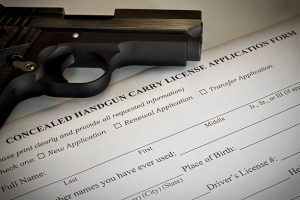 Can you have a Medical Cannabis Card and a FOID card at the same time? Can you have a Medical Cannabis Card and a Conceal and Carry Permit at the same time? You would think that these questions are easy to answer. However, these questions have caused great confusion and misunderstanding in Illinois. The State Legislature has done a terrible job of clearing up the law and making this an easy issue to solve. Instead, you have to search for answers to these questions for yourself. If you ask an employee at a gun shop if you can have both, you will get a different answer depending on the day of the week. Let me try to explain the situation and what I believe the law is. Stay tuned for a way around it. Something you will not find anywhere else!
 It is common for clients to ask me if I can get their case dismissed because the police did not tell them that they have the right to remain silent when they were arrested. The right to remain silent comes from the 5th Amendment to the United States Constitution which protects citizens from incriminating themselves. This means that you cannot be forced to testify against yourself. The 5th Amendment’s right to remain silent is an important right that every citizen has but is not asserted as often as it should be by criminal defendants. In order for a statement made to the police during a custodial interrogation to be used against you in Court, the state has to prove that you made a knowing, intelligent, and voluntary waiver of your 5th Amendment right to remain silent. Let me explain.
 Today, I met with 2 new clients to talk about representing them for their criminal cases at the Rolling Meadows Courthouse. Both cases have different facts, and both clients responded differently when they were confronted by the police. I want to talk about these 2 cases because they illustrate how what clients do when they interact with the police, can often be the difference between winning and losing a criminal case, going to jail, or walking away from criminal charges without a conviction.