 Chicago Criminal Lawyer Blog





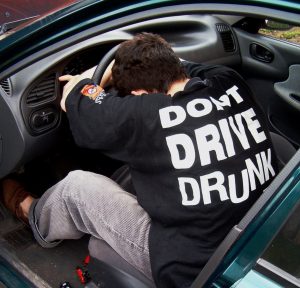 I frequently speak to clients who have been arrested for a DUI. After the initial shock of being arrested wears off, most DUI clients start to think about the future and the possible implications of having a DUI. As with most things, most people do not think about what could happen to them if they picked up a DUI until it actually happens to them. When I receive those calls, most clients are initially worried about whether they will be going to jail. After I explain to them that jail is usually not an option for a first time DUI, the next question is whether they will lose their license as a result of the DUI. I want to take an opportunity to talk about how a DUI can affect your drivers license.
A first time DUI is considered a Class A Misdemeanor in Illinois. A Class A DUI Misdemeanor carries a maximum penalty of up to one-year in County Jail and a maximum fine of $2,500. While it is possible to go to jail for your first DUI, It is highly unlikely that you will be sentenced to jail for your first DUI. It is always possible to receive Court Supervision for your first DUI. Court Supervision is not considered a criminal conviction. A sentence of Court Supervision for your first DUI will allow you to keep your license and maintain your driving privileges in the State of Illinois. Most first time DUI offenders that are found guilty of a DUI, receive Court Supervision for their first DUI. Conditional Discharge is another possible sentence for a first time DUI. Conditional Discharge is considered a conviction that will have serious implications for your drivers license. A sentence of Conditional Discharge for a DUI will result in the revocation of your drivers license and will prohibit you from being able to operate a motor vehicle in the State of Illinois. While it is possible to receive Conditional Discharge for your first DUI, it is rare to see this happen for a first time DUI. However, if you get a second DUI, you cannot receive Court Supervision. The lowest sentence that you can receive for a second DUI is Conditional Discharge. A sentence of conditional discharge for a DUI, whether it’s your first or second DUI, will result in the revocation of your drivers license and will cause you to lose your driving privileges in the State of Illinois.
If you are arrested for a DUI, you will be given some paperwork when you leave the Police Station. It is very important that you read, and understand, the paperwork you are given. One of the documents will be entitled, ‘Notice of Statutory Summary Suspension.’ Depending on whether you took a breathalyzer test or refused to take a breathalyzer test, one of the two boxes on the top left hand part of the document will inform you that your license will be suspended for a period of time. If you took a breathalyzer test and your blood alcohol level was .08 or above, the Notice of Statutory Summary Suspension will notify you that your drivers license, or your Illinois driving privileges, will be suspended for six months. The six-month suspension will begin 46 days after the date of the DUI arrest. If you refused to take a breathalyzer test, the Notice of Statutory Summary Suspension will notify you that your drivers license and your Illinois driving privileges, will be suspended for 12 months. The 12 month suspension will begin 46 days after the date of the DUI arrest. This is known as the Statutory Summary Suspension. The Statutory Summary Suspension will apply to cases involving a blood draw and a refusal to submit to a blood draw. To challenge the Statutory Summary Suspension, your lawyer must file a Petition to Rescind the Statutory Summary Suspension within 90 days of the date of your DUI arrest. When you meet with your lawyer for the DUI, make sure you bring all of the paperwork you received at the police station to the meeting with your DUI lawyer. The papers contain important information that your DUI lawyer will need to prepare and file the Petition to Rescind the Statutory Summary Suspension. We have previously discussed what a Petition to Rescind is, and how to pursue the Petition in court.
 When most people find themselves facing criminal charges, basic human instincts will kick in and they will want to try to talk themselves out of the predicament that they find themselves in. This usually happens early on in a criminal case when the police question you and want to get your side of the story. You always have the right to talk to the police and to testify at your trial, however, that may not always be the best strategy. In my 28-years of practicing criminal law, I can honestly say that the biggest mistake that most criminal defendants make is talking to the police. Sometimes, defendants continue making the same mistake and insist on testifying at trial. I want to talk about what your rights are when you are on trial and why you should think twice about talking to the police and testifying at trial.
 I often have to catch myself when I’m talking to my clients about their criminal cases. As lawyers, we sometimes use terminology that while it may be common for us, is foreign to most people who are not involved in the criminal justice system every day like we are. The other day I was talking to a client about the status of their criminal case and I mentioned to the client that I was ‘waiting for Discovery’. I didn’t give the terminology a second thought, assuming that the client knew what I was talking about. However, the client made it very clear that they did not understand what I was saying and I realized that most clients probably feel the same way. I want to take this opportunity to describe what Discovery is and why it sometimes takes a long time time for Discovery to be complete.
 After 28 years of practicing criminal law, it is very rare to hear a client tell me something about a criminal case that I never heard before. Throughout the years, I have handled thousands of DUI cases. While every case is unique, there are certain common elements to certain criminal cases. This is especially true with most DUI cases. While it is common for me to speak with clients who were arrested for a DUI, for the clients I am speaking to, this is a unique and scary experience for them. Part of my job as a criminal defense lawyer is to listen to the client and guide them through the process so they understand what is happening and how the criminal justice system works. In this post, I want to explain to my readers what a typical DUI arrest looks like.
 When a criminal defendant pleads guilty, or is found guilty, of a criminal charge, the impact of the punishment depends on the sentence imposed by the Court. The Court can impose a variety of sentences in a criminal case. Perhaps, the best, or the least severe sentence in Illinois could be Court Supervision. The most severe punishment would be a conviction and the imposition of a jail sentence. I want to take this opportunity to discuss Court Supervision and why this may be the best option for your criminal or traffic case. This will be a general discussion of Court Supervision in Illinois. You should consult with your criminal defense lawyer to see how a sentence of Court Supervision would apply to your case and your particular situation.
 The internet has made it easy for people to sell items online to make some extra money. Popular websites, such as eBay and Craigslist, have made it easy for almost anyone to instantly go into business by simply using a computer or a cell phone to get into the retail business. However, you should be aware of the potential pitfalls of doing business like this. Recently, I was hired to represent a client charged with violating the Illinois Counterfeit Trademark Act. The Counterfeit Trademark Act (765 ILCS 1040/) makes it a crime to sell look alike goods or services bearing a fake trademark or logo. The client that I was hired to represent was selling knockoff high-end watches on Craigslist that he had purchased legally from China. The client was buying the watches for about $50 and selling them online for between $200 and $250. This was not the clients main source of income, but it made him enough money to comfortably pay his bills and provide for his family. That’s until the client was arrested charged with violating the Counterfeit Trademark Act. It was not until the client came to my office bad he found out that what he was doing was against the law and that it carried some pretty serious criminal and monetary penalties.
 Illinois has decriminalized the possession of small amounts of marijuana in Illinois. As of January 1, 2020, you can legally possess up to 30 grams cannabis flower. If you are visiting the State of Illinois, you can legally possess half of the amount that residents of Illinois can possess.
 Children are not considered adults until they reach 18 years of age. But what happens if a child, under the age of 18, commits a crime? Can they be charged and prosecuted as if they were an adult, or will the criminal justice system treat them as a juvenile who will be prosecuted in Juvenile Court?
 The consequences and fallout from being arrested and facing criminal charges can last long after your case is finished. If you are found guilty, the case can follow you around for the rest of your life. If you win your case, and are found not guilty, or if the charges are dismissed, a routine background search may reveal the criminal charges. Even though the case was dismissed, or you want, a prospective employer will see that you were accused of a crime and may hold that against you in deciding whether to hire you.
 DuPage County government officials have announced that DuPage County will be closing down the Downers Grove Field Court and moving all of the cases at that Branch Court to the DuPage County Courthouse in Wheaton. The change is expected to take place by the end of the year. The Downers Grove Field Court is located at 4000 Saratoga Avenue in Downers Grove. It is located inside American Legion Post 80. The Downers Grove Field hears Traffic Cases, Municipal Ordinance Violations, and minor Misdemeanor violations from The following municipalities in DuPage County: Bolingbrook, Burr Ridge, Clarendon Hills, Darien, Downers Grove, Hinsdale, Lemont, Lisle, Oakbrook Terrace, Westmont, Willowbrook, Woodridge, and the Illinois State Police.