 Chicago Criminal Lawyer Blog


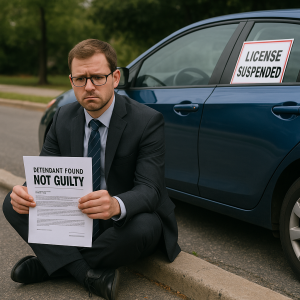
One of the questions I hear all the time from people arrested for DUI is this: “If I beat the DUI case, doesn’t that mean I get my license back?” You would think so. Unfortunately, in Illinois, that is not necessarily how it works. A person can be arrested for DUI, fight the criminal case, be found not guilty, and still have his or her driver’s license suspended. That comes as a shock to a lot of people. It also causes a great deal of frustration because, from a common-sense standpoint, it seems unfair. If the State cannot prove that you were driving under the influence, why should you still lose your license because of the arrest? The reason is that Illinois treats the DUI charge and the driver’s license suspension as two different matters. That distinction is extremely important, and it is one of the first things I explain to clients when they come into my office after a DUI arrest.
A DUI Arrest Can Create Two Separate Problems
When you are arrested for DUI in Illinois, you are usually facing two separate legal proceedings. The first is the actual criminal DUI charge. That is the case where the prosecutor has to prove that you were driving or in actual physical control of a vehicle while under the influence of alcohol, drugs, or another intoxicating substance. The second issue involves your driver’s license. That is where the Statutory Summary Suspension comes into play. The Statutory Summary Suspension is not the same thing as a criminal conviction for DUI. It is an administrative suspension of your driving privileges that can be imposed by the Illinois Secretary of State after a DUI arrest. And here is the part that catches many people off guard: The suspension usually takes effect before your DUI case is ever resolved. In most cases, the Statutory Summary Suspension begins on the 46th day after the DUI arrest unless it is successfully challenged. Your criminal case could still be months away from trial. You may not even have received all of the police reports or videos yet. It does not matter. Unless the suspension is successfully challenged, it can go into effect while the DUI charge is still pending.
Why Can Illinois Suspend Your License Before You Are Found Guilty?
This is where the law can become confusing. The criminal DUI case and the driver’s license suspension are treated separately. The DUI case is about whether the State can prove you guilty of the criminal offense. The Statutory Summary Suspension is based on what happened after your arrest, including whether you submitted to chemical testing, refused testing, and whether the legal requirements for the suspension were satisfied. If you submit to chemical testing and the test shows an alcohol concentration of .08 or above, or another result that triggers the suspension law, your license can be suspended. If you refuse testing, you can also face a suspension.
For a first offender, the suspension periods described in the original article are generally six months for failing chemical testing and one year for refusing testing. Longer suspension periods can apply if you have prior DUI-related history. What many people do not understand is that none of this requires the State to first obtain a DUI conviction. That is why waiting for the criminal case to be resolved can be a major mistake.
Do Not Assume the Police Report Tells the Whole Story
In more than 34 years of handling criminal and DUI cases, I have learned something very important: You do not simply read a police report and assume that everything in it is accurate. You investigate. You look at the video. You look at the reason for the traffic stop. You examine what the officer claims to have observed. You look at how the field sobriety tests were performed. You examine the breath test or other chemical testing. You look at whether the officer followed the proper procedures. And if the driver supposedly refused testing, you look carefully at exactly what happened before the officer called it a refusal. There can be a significant difference between what an officer writes in a report and what actually appears on body-camera or squad-car video. That is why I never like to assume that a driver’s license suspension is automatically valid simply because a police officer says it is.
You Can Fight the Statutory Summary Suspension
A person arrested for DUI has the right to challenge the Statutory Summary Suspension. This is generally done by filing a Petition to Rescind the Statutory Summary Suspension. The purpose of the petition is to ask the court to determine whether the suspension was legally proper. Depending on the facts, there may be a number of issues to examine.
For example:
-Was there a lawful basis for the police officer to stop the vehicle?
-Did the officer have sufficient grounds to believe the driver was under the influence?
-Was the arrest legally proper?
-Were the required procedures followed?
-Was the breath test administered properly?
-Was there a problem with the testing equipment?
-Was the request for chemical testing lawful?
-Did the officer properly characterize the driver’s conduct as a refusal?
Those questions can become critical. If the Petition to Rescind is successful, the court can rescind the Statutory Summary Suspension and the driver can keep his or her driving privileges. That can happen even while the criminal DUI case is still pending. This Is Why I Tell People to Act Immediately. A DUI arrest is not the kind of case where you want to wait several weeks before speaking with a lawyer. The driver’s license issue starts moving almost immediately. If the suspension is scheduled to begin on the 46th day after the arrest, every day matters. The defense attorney needs time to examine what happened, obtain the evidence, review the reports and videos, and determine whether there are grounds to challenge the suspension. I have seen people focus entirely on the criminal DUI charge and forget about their driver’s license until the suspension is about to start. By that point, they are scrambling. That is not where you want to be. The license issue should be addressed at the beginning of the case.
What Happens If the DUI Charge Is Dismissed?
Another question I get is: “What if the prosecutor drops the DUI?” Again, that does not necessarily end the Statutory Summary Suspension. The same is true if you go to trial and are found not guilty. The criminal case can end in your favor while the driver’s license suspension remains in place. Why? Because they are separate proceedings. A dismissal of the DUI does not automatically erase the administrative suspension. A not-guilty verdict does not automatically erase it either. That is why I tell clients not to make the mistake of thinking: “I’ll just beat the DUI and worry about the license later.” You should be dealing with both issues from the beginning.
Winning the DUI Case Does Not Automatically Undo the Suspension
Suppose you are arrested for DUI. You either fail or refuse chemical testing. A Statutory Summary Suspension is entered. Several months later, your DUI case goes to trial. You are found not guilty. That is obviously a very good result in the criminal case. But your driver’s license suspension may still be in effect. The two cases do not automatically rise and fall together. Depending on the particular circumstances of the case, there may be options to challenge the suspension later, but that is not something I would advise anyone to rely on. The better approach is to challenge the driver’s license suspension as early as possible.
What If You Need to Drive to Work?
For many people, losing a driver’s license is devastating. They need to get to work. They may need to drive children to school. They may care for elderly parents. They may have jobs that require driving. They may have medical appointments or other responsibilities that cannot simply be put on hold. Depending on the driver’s history and eligibility, a first-time offender may qualify for a Monitoring Device Driving Permit, commonly referred to as an MDDP. An MDDP generally allows a qualifying driver to operate a vehicle during the suspension period if a Breath Alcohol Ignition Interlock Device, or BAIID, is installed. The device requires a breath sample before the vehicle can be operated. Not everyone qualifies. Prior DUI arrests, prior suspensions, and other parts of the driver’s history can affect the options that may be available. That is another reason why every DUI case has to be looked at individually. There is no one-size-fits-all answer.
Every Part of the DUI Arrest Needs to Be Examined
When I represent someone charged with DUI, I do not look at the case as simply a question of whether the prosecutor can prove a .08 breath result. A proper DUI defense starts much earlier than that. Why did the officer stop the car? Was the driving actually bad enough to justify the stop? What did the officer claim to observe? What does the video show? How did the driver speak? How did the driver walk? How were the field sobriety tests explained? Were they administered properly? Was there really probable cause to make a DUI arrest? What happened before the officer asked for chemical testing? Was the testing done correctly? Were there procedural errors? Those details can affect both the criminal case and the driver’s license suspension. Sometimes the most important evidence in a DUI case is not what the officer wrote in the police report. It is what the video shows.
The Bottom Line
Yes. In Illinois, your driver’s license can be suspended even if you are later found not guilty of DUI. The reason is simple: the Statutory Summary Suspension and the criminal DUI charge are separate legal matters. That means you cannot assume that winning the DUI automatically fixes the driver’s license problem. You need to deal with both. And you need to deal with them early. If you have been arrested for DUI, the circumstances surrounding the stop, arrest, chemical testing, and suspension should be investigated immediately. There may be grounds to file a Petition to Rescind the Statutory Summary Suspension. There may also be issues in the case that affect the criminal DUI charge. But those issues need to be identified. They do not identify themselves.
Contact Illinois DUI Defense Attorney James Dimeas
I have spent more than 34 years representing people accused of DUI and other criminal offenses throughout Chicago, Cook County, DuPage County, Kane County, Lake County, and the surrounding suburbs. I have handled DUI cases in courtrooms throughout the Chicago area, and I understand how much is at stake when a person is facing both a criminal charge and the possible loss of a driver’s license. A DUI arrest can affect your job, your ability to drive, your insurance, your finances, and your future. That is why I believe the case needs to be investigated from the beginning and every available defense needs to be considered. I have been recognized by numerous legal organizations over the course of my career, including the National Trial Lawyers, the National Academy of Criminal Defense Attorneys, the American Society of Legal Advocates, the American Institute of Criminal Law Attorneys, Expertise, AVVO, and Attorney and Practice Magazine. But awards do not win cases. Preparation does. Experience does. Knowing what to look for does.
Call 847-807-7405 or fill out our online form for a confidential consultation to learn more about DUI defense in Illinois and how I can help.
Additional Blogs: