 Chicago Criminal Lawyer Blog





 What determines how serious a particular criminal charge in Illinois is depends on the potential criminal penalty that the crime carries. The lowest classification of crimes in Illinois is called a Misdemeanor. The highest classification of crimes in Illinois is called a Felony. Generally, any jail sentence for a Misdemeanor must be served in County Jail. Any jail sentence for a Felony must be served in State Prison. Any potential jail sentence for a Misdemeanor is under one year while any potential jail sentence for a Felony is one year or more. The range of penalties for Misdemeanors and Felonies in Illinois depend on what Class the crime you are charged with falls in. Every criminal offense is classified as a Felony or a Misdemeanor and assigned a specific Class. An experienced and knowledgeable criminal defense lawyer will know whether you are being charged with a Felony or a Misdemeanor and what class your criminal charge falls in.
Most Misdemeanor cases in Illinois are Class A Misdemeanors. A Class A Misdemeanor is punishable by a maximum of one year in county jail and a maximum fine of up to $2,500. An example of a Class A Misdemeanor is a Retail Theft or a simple Battery. But not all Class A Misdemeanors are treated equally. Domestic Battery is a class A Misdemeanor. However, if you are found guilty of a Domestic Battery, it can never be removed from your record while a Retail Theft can be. In addition, you can receive Court Supervision for a Retail Theft but you cannot receive Court Supervision for a Domestic Battery.
A Class A Misdemeanor that I am seeing more and more in court is Aggravated Speeding. You can be charged with a Class A Aggravated Speeding offense if you are speeding 35 miles or more over the posted speed limit. This crime used to be a simple speeding ticket. That is no longer the case in Illinois. So, if you are speeding 35 miles an hour over the speed limit, then you can be charged with a Class A Misdemeanor which carries a potential jail sentence of up to 364 days in County Jail and a fine up to $2,500.
 Because of the widespread use of marijuana in our society, it is common to see criminal cases involving people who have been caught with marijuana and charged with Possession of Marijuana. While several States have legalized the recreational use of marijuana, Illinois is not one of those States. The furthest Illinois has gone to legalizing marijuana is to enact the Medical Marijuana statute which allows for the medical use of marijuana. Unless you have been approved to use Medical Marijuana, it is illegal to use and possess any amount of marijuana in Illinois. So what could happen to you if you are arrested by the police and charged with possession of marijuana?
 Cook County Chief Judge Timothy Evans has issued an order which makes the greatest attempt yet to deal with overcrowding in Cook County Jail which is caused by defendants being forced to sit in jail while their cases work their way through the Cook County criminal justice system simply because they cannot afford to post the bond needed to walk out of jail. Estimates place the number of defendants who are sitting in Cook County Jail just because they can’t afford to post bond at between 250 to 300 inmates per day. Most of those bonds are for $1,000 or less. This problem plays a major role in the overcrowding of the 9,000 inmate Cook County Jail. The overcrowding problem at Cook County Jail is causing a major strain on Cook County’s limited budget resources.
 Last week, Kane County State’s Attorney, Joe McMahon, reported that Kane County Prosecutors have seen a rise in the number of criminal cases filed in Kane County in the first six months of this year compared to last year. McMahon reports that felony filings are up 15.7% compared to the same period last year. The increase in criminal cases in Kane County is happening with misdemeanor and traffic cases as well. In the first six months of 2017, 1,247 new felony cases were filed. During the same period last year, 1,078 cases were filed. Aurora, the largest city in Kane County, has seen a drop in the number of new felony cases. Most criminal cases in Kane County come from Aurora. The Village of Carpentersville has seen a rise in the number of Retail Theft cases. Carpentersville police attribute this to the opening of a new Walmart in Carpentersville. Elgin, the second largest city in Kane County, has seen a rise in violent crimes. McMahon is concerned with the increase in the number of criminal cases filed in Kane County since the number of criminal cases filed increased in 2016 as well.
 This is one of the more common questions that I get asked when people call me wanting advice about how to deal with a situation like this. Many people think that as long as it’s not the police asking questions, they have nothing to worry about. Nothing can be further from the truth. If your employer is suspecting that you stole something and they want you to come in to the office to discuss the matter, you need to be aware of how dangerous this situation can be. This situation can be more dangerous than talking to the police. Let me explain why.
 A Pre-trial conference is the usual way that a criminal case is resolved in Illinois without the need to go to trial. The Pre-trial conference is a meeting that occurs between the prosecutor, the defense lawyer, and the judge. The meeting is usually, but not always, behind closed doors, and the parties all get together to discuss the case to see if there’s a way to work out an agreement short of trial. Illinois Supreme Court Rule 402 allows for this conference to happen and sets forth the requirements for such a conference to occur. That’s why this type of conference is commonly called a “402 Conference” by lawyers and judges.
 This is a very frequent question that I get from people that call me. They want to know how the police can arrest them without any evidence that they did anything wrong. Just because you were arrested by the police and charged with a crime does not mean that you are guilty. An arrest and a criminal charge is just an allegation. The police officer who arrested you, and the prosecutor that charged you with a crime, believe that you did something wrong. Now they must prove you guilty beyond a reasonable doubt in court. There’s several things that you can do to make it more difficult for the police and the prosecutors to prove you guilty in court. Let’s talk about some of the things that you can do to help your case.
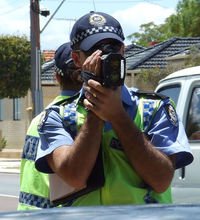 Every year the Alliance Against Intoxicated Motorists releases it’s annual DUI arrest survey for Illinois DUI arrests. This year’s study has some interesting statistics and numbers that I want to share with my readers. The Alliance Against Intoxicated Motorists sends out surveys to almost 700 police agencies in Illinois. Roughly 81% of the police agencies responded and they release the findings every year.
 The Arlington Heights Police Department has announced that they will have a Traffic Enforcement Campaign in place from June 26 to July 9, 2017. The Traffic Enforcement Campaign coincides with the upcoming Fourth of July weekend. The Traffic Enforcement Campaign will check motorists and vehicles for seatbelt violations, DUI driving, and a roadside safety checkpoint. The first roadside safety checkpoint will take place on June 28th on Arlington Heights Road just south of Algonquin Road. A roadside safety checkpoint is a way that the police can look inside your vehicle and pull you over to the side if they smell something, or see something inside the car, or suspect that the driver is up to no good. What the Arlington Heights Police are planning on doing this weekend is commonly known as a “Police Roadblock.” The Arlington Heights Police will be looking for people that are not wearing their seat belts and are Driving Under the Influence of Alcohol or Drugs. The enforcement campaign is being paid for with Federal Traffic Safety Funds and administered by the Illinois Department of Transportation.
 Cook County State’s Attorney, Kim Foxx, has announced that her office will stop prosecuting cases involving people charged with driving on a suspended or revoked driver’s license based on a financial reason, such as failure to pay parking tickets. tolls or child support. The decision to do this is based on a lack of funding for the State’s Attorney’s Office which has left the office with not enough prosecutors to handle the criminal prosecutions in Cook County. This does not mean that these cases will go away in Cook County. Individual towns, cities and villages will be allowed to prosecute these cases themselves. This could mean a rise in the number of cases being charged as Municipal Violations. Each city, town, and village can set up their own administrative process which involves Hearing Officers and attorneys hired by the towns and Villages, that collect fines for violations. The standard of proof in a Municipal Ordinance Violation case is much lower than in a criminal case and the potential punishment is a monetary fine and not jail time.